
Certified Human Resource Management Professional (CHRMP)

Certified Human Resource Management Professional (CHRMP)

شهادة إدارة الموارد البشرية الاحترافية

Objectives:

Upon completion, the trainee will be better able to:
  1. Define the characteristics of effective HR management
  2. Define the main uses and applications of competencies in Human Resources
  3. Understand the importance of a competency-based training & development approach
  4. Explain the role of HR in performance management
  5. Define recruitment and selection and its importance in reducing staff turnover
  6. Develop an action plan to transfer the new skills to the workplace.

Topics:

I. MANAGEMENT PRACTICES
  • HR Roles: Advisory/Counselor/Consultant/Service Control
  • Change Agent Role/Reengineering and Facilitating, both content & process
  • HR’s Role in Strategic Planning
  • HR Generalist and HR Specialist Roles
  • Effects of Different Organizational Contexts and Industries on HR functions
  • HR Policies and Procedures
  • Integration and Coordination of HR Functions
  • Outsourcing the HR Functions
  • Environmental Scanning
  • Internal Scanning
  • Human Resources Inventory
  • Human Resource Information Systems
  • Action Plans and Programs
  • Evaluation of Human Resource Planning
  • Organizational Structures
  • Organizational Development
  • Diagnosis and Intervention Strategies: Action Research, Sensing, Team Building, Goal Setting
  • Survey Feedback, Strategic Planning, Visioning, Sensitivity Training (T-groups)
  • Role of Organizational Culture in Organizational Development
  • Role of International Culture in Organizational Development
  • Organizational Development in Response to Technological Change
  • HR Budgeting Process
  • HR Control Process
  • Evaluating HR Effectiveness
  • Motivation Theories
  • Applying Motivation Theory in Management
  • Leadership Theories
  • Effect of Leadership in Organizations
  • Leadership Training
  • Performance Planning: Identifying Goals/Desired Behaviors
  • Setting and Communicating Performance Standards
  • Measuring Results and Providing Feedback
  • Implementing Performance Improvement Strategies
  • Evaluating Results
  • Work Teams
  • Job Design and Redesign
  • Employee Ownership/ESOPs
  • Employee Suggestion System
  • Participative Management
  • Alternative Work Schedules
  • Role of HR in Employee Involvement Programs
  • Research Design and Methodology
  • Quantitative Analysis
  • Qualitative Research
  • J. International HR Management
  • Cultural Differences
  • Legal Aspects of International HR
  • Expatriation and Repatriation
  • Issues of Multinational Corporations
  • Compensation and Benefits for Foreign Nationals and Expatriates
  • The Role of HR in International Business
  • Ethical Issues
  • Establishing Ethical Behavior in the Organization
II. GENERAL EMPLOYMENT PRACTICES
  • Definitions, Requirements, Proscribed Practices
  • Methods of Job Analysis
  • Types of Data Gathered in a Job Analysis
  • Uses of Job Analysis
  • Job Descriptions
  • Job/Position Specifications
  • Validity & Reliability of Job Analysis, Job Description, & Job Specification
  • Employment-At-Will Doctrine
  • Exceptions to Employment-At-Will
  • Common Law Tort Theories
  • Job-As-Property Doctrine
  • Non-Compete Agreements
  • Performance Measurement- The Criterion
  • Criterion Problems
  • Documenting Employee Performance
  • Category Rating Appraisal Methods
  • Comparative Appraisal Methods
  • Narrative Appraisal Methods
  • Special Appraisal Methods: MBO, BARS, BOS
  • Types of Appraisals
  • Rating Errors
  • Appraisal Interview

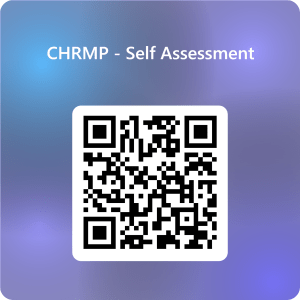
Test your level of knowledge with this self-assessment test.

Just click on or scan the QR code to the left or click here.

To learn more fill the following form (English or Arabic) and a training consultant will call you:

← Back

Thank you for your response. ✨

Professional Translation Certification – PTC

Professional Translation Certification (PTC)

Objectives:

Upon completion, the trainee will be better able to:

1. Identify research resources
2. Utilize technology tools to generate translated text
3. Translate more accurately and less literally
4. Critically proofread a translated text
5. Analytically defend one’s own translation
6. Translate from and into legalese

Topics:

  • Introduction of trainers and guest speakers
  • Methodology
  • Outline
  • House rules
  • Kick-off assignment
  • Research resources for translators
  • Online search techniques for translators
  • Hands-on dictionary use techniques for translators
  • Expert advice
  • Common paralinguistic mistakes
  • 10 MS suite tips for translators
  • Writing skills: simplicity, clarity and elegance
  • Common errors and pet peeves
  • Approaching a text
  • Translation techniques
  • Translation strategies
  • Target text proofreading
  • Pre-submission checklist
  • Terminology building techniques
  • Media translation
  • Political translation
  • Business translation
  • Literary translation
  • Introduction
  • Legalese
  • Legal Drafting
  • Legal jargon
  • How to become a MoJ certified translator
  • What to brand?
  • Where to brand?
  • How to locate and land jobs on local, regional and international markets
  • 3-hour final assessment test

Frequently Asked Questions (FAQ)

PTC is tailor-made to meet the needs of the labor market in the field of translation, it serves both experienced and inexperienced translators to elevate the translation skills. Accordingly, the prime focus of PTC is on professionalism. Safe to say that PTC is not a level-based but a competency-based training, it starts with boosting your research and analytical reading skills, utilizing your technological devices, building your terminology, and reaches to approaching translation as a process, the types of translation and the techniques of avoiding literal translation. PTC provides you with the appropriate reading plan that goes hand in hand with the topics discussed throughout the training course to foster your knowledge.

Bearing in mind that the translator usually gets in touch with a variety of documents, especially in case he/she works at the Palestinian labor market; the chances of getting a job opportunity as a specialized translator in one only field is little to none compared with the capacity of the market. Therefore, PTC gives the prime focus on the process, approaches, and stages of translation among a variety of topics. To list some: we focus on legal, commercial and social translation, so the first stage before getting to be specialized, and in introducing you to the steps upon which the translator gets to improve his/her skills in the desired topic.

Yes! The certificate is approved by the Ministry of Education and Higher Education. The goal of this training is to enable you to enter the labor market, and to that end, we at Ritaj offer our trainees two job opportunities if proved to have excellent performance throughout the training course.

Yes! PTC has a specified section that handles preparing and studying for the Palestinian Ministry of Justice Translation Certification Examination.

Yes, you are examined twice, once prior to the course, and once after.

No, you can only take the course by attending the sessions at Ritaj’s premises.

Yes, it is a requirement to have a BA degree in language, education, or in another related field.

Yes! The first job opportunity you will be met with is at Ritaj in the Department of Languages and Translation.

The trainers are professional and experienced translators and practitioners.

The minimum requirements needed to succeed in this training:

English proficiency
80%
Very good command of Arabic and English
85%
Strong professional development motivation
80%
Basic computer and MS skills
80%
Self-Commitment
90%
To learn more fill the following form (English or Arabic) and a training consultant will call you:

← Back

Thank you for your response. ✨

Project Management Professional – PMP

Project Management Professional (PMP)

شهادة مُحترف إدارة المشاريع

Objectives:

  • Understand project design
  • Improve knowledge on project cycle management
  • Focus on exam preparation techniques
  • Review the topics covered on the exam
  • Discuss international and local case studies

Topics:

  • Project Management Context
  • Project Management Framework
  • Project Management Processes introduction
  • Class Exercise (individual or group)
  • Review Definitions
  • Integration Introduction & Processes
  • Project Planning, execution, and control
  • Class Exercise (individual or group)
  • Review Definitions
  • Scope Introduction & Processes
  • Develop a WBS – exercise
  • Develop Change Management
  • Class Exercise (individual or group)
  • Scope EXAM
  • Time Introduction & Processes
  • Class Exercise (individual or group)
  • Time EXAM
  • Cost Introduction & Processes
  • Earned Value Analysis
  • Class Exercise (individual or group)
  • Cost EXAM
  • Quality Theories & Processes
  • Cost of quality, conformance
  • Quality Tools
  • Class Exercise (individual or group)
  • Quality EXAM
  • HR processes
  • Organization Planning, Staff Acquisition, Team Development
  • Class Exercise (individual or group)
  • HR EXAM
  • Communications Introduction
  • Communication Processes Communication Planning, Information Distribution,
  • Performance Reporting, and Administrative Closure
  • Communications Plan
  • Communication Styles & Methods of Communication
  • Class Exercise (individual or group)
  • Communication EXAM
  • Risk Introduction & Processes
  • Risk Response Categories
  • Contingency Planning
  • Class Exercise (individual or group)
  • Risk EXAM
  • Procurement Introduction & Processes
  • Procurement Planning, Solicitation Planning, Solicitation, Source Selection
  • Contract Administration, Contract Closeout
  • Risk and Contract Types
  • Contract Change Control System
  • Class Exercise (individual or group)
  • Procurement EXAM
  • Responsibility to Profession
  • Responsibility to Public
  • Professional Responsibilities EXAM
  • Description of test environment
  • Exam strategies & tips & tricks
  • One-on-one score Review
  • Review selected questions

Testimonials :

“We would like to thank Bahjat for the excellent PMP training provided. The classes were inspiring and insightful. The trainer delivered the comprehensive knowledge of PMBOK in an understandable manner and illustrated the content with practical examples from his own extensive work experience in organizations from the private and non-governmental sector and in different PM knowledge areas. The trainer gave room for discussion and questions during the class, which made the classes both effective in terms of preparing for the exam and enjoyable at the same time. Taking the course at Ritaj with Bahjat was a definite gain for our professional development. The communication with Ritaj regarding the course was smooth and helpful. Ritaj provided an individual PMP training package tailored to our needs (English as language of instruction, and a flexible schedule to accommodate other commitments). Therefore, we would like to thank Ritaj for offering this unique learning opportunity to us.”

Richard Gutmann
Organizational Development Advisor
GIZ
Astrid Leonhardt
Development Advisor
GIZ
To learn more fill the following form (English or Arabic) and a training consultant will call you:

← Back

Thank you for your response. ✨