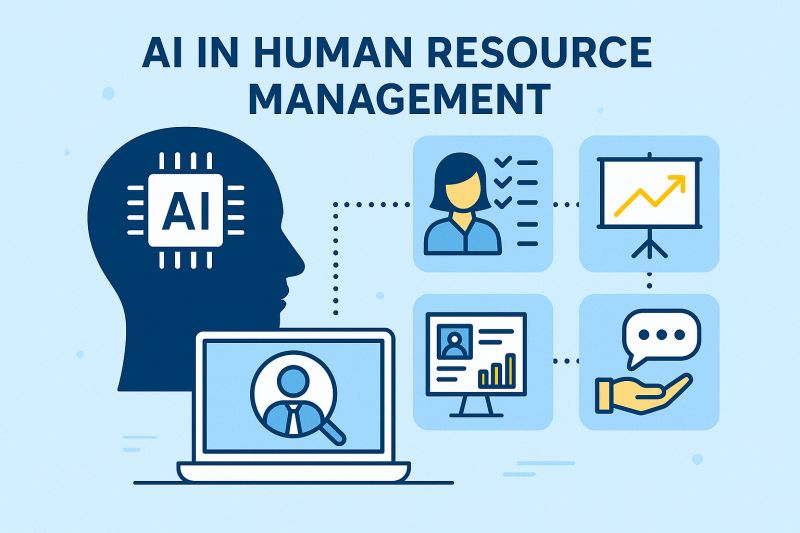
AI for HR Professionals (AI4HR)

AI for HR Professionals

تطبيقات الذكاء الاصطناعي في إدارة الموارد البشرية

Objectives

تهدف الدورة إلى تمكين المتدربين من استخدام أنظمة دعم ذكية وتحليل بيانات الموارد البشرية بطرق مبتكرة، مما يعزز من دقة القرارات وسرعة الاستجابة، ويجعل تجربة الموظف أكثر تفاعلاً وذكاءً

Sessions

  • مقدمة حول الذكاء الاصطناعي التوليدي (Generative AI)
  • كيف تعمل النماذج مثل ChatGPT وClaude وGemini
  • الفرق بين الذكاء الاصطناعي التحليلي والتوليدي
  • كيف يمكن للذكاء الاصطناعي أن يحسّن تجربة الموظف ويقلل المهام الروتينية
  • حالات استخدام حقيقية في أقسام الموارد البشرية لدى شركات عالمية
  • نشاط عملي:
    كتابة أوامر (Prompts) لسيناريوهات توظيف وتقييم أداء عبر ChatGPT
  • إنشاء أوصاف وظيفية احترافية بواسطة ChatGPT
  • تصميم مقابلات وأسئلة تقييم ذكية للمرشحين
  • تحليل السير الذاتية آليًا (Resume Screening)
  • استخدام الذكاء الاصطناعي للتنبؤ بمدى توافق المرشحين ثقافيًا وسلوكيًا
  • كيفية دمج ChatGPT في أدوات HR مثل Microsoft Teams

نشاط عملي:
إنشاء نموذج يقوم بتقييم السير الذاتية واقتراح أفضل المرشحين

  • بناء مسارات تعلم مخصصة
  • توليد محتوى تدريبي ذكي للموظفين
  • تحليل احتياجات التدريب باستخدام أدوات AI التحليلية
  • استخدام الذكاء الاصطناعي كمساعد تعلم افتراضي للموظفين

نشاط عملي:
إنشاء خطة تدريبية مخصصة لموظف بناءً على مهامه الحالية وبياناته

  • دمج الذكاء الاصطناعي  وادوات التحليل ،لتحليل بيانات الأداء والدوران الوظيفي
  • إنشاء تقارير ذكية مدعومة بالنصوص التفسيرية  (Narrative Insights)  
  • التنبؤ بسلوك الموظفين واتجاهات الرضا والاستقالة
  • تحليل استبيانات الموظفين (Feedback) باستخدام الذكاء الاصطناعي لتحليل النصوص المفتوحة

Prerequisites

معرفة باستخدام الحاسوب وبرنامج اكسل

Meet the Trainer

Trainer

For more information

To learn more, fill the following form (English or Arabic) and a training consultant will call you:

← Back

Thank you for your response. ✨

Financial Investigations and Fraud Detection (FIFD)

Financial Investigations and Fraud Detection (FIFD)

أسس التحقيق المالي وكشف الاحتيال

Objectives

  • Increase awareness and knowledge of different types of financial fraud and embezzlement.
  • Equip participants with investigative tools and techniques for identifying and addressing fraud.
  • Strengthen participants’ skills in preparing professional investigation reports.
  • Enable the audit and control team to assess risk environments and apply proactive audit methodologies.

Sessions

  • Definition and Key Concepts of Fraud
  • The Fraud Triangle: Pressure – Opportunity – Rationalization
  • Distinguishing Between Fraud and Error
  • Overview of Legal and Regulatory Frameworks (Local and International)
  • Document and Record Forgery
  • Conflict of Interest
  • Bribery and Corruption
  • Embezzlement and Asset Misappropriation
  • Procurement and Payroll Fraud
  • Analysis of Common Schemes through Real-Life Case Examples
  • Behavioral Red Flags in Individuals
  • Transaction-Level and Process-Related Warning Signs
  • Weak Internal Controls as Enablers of Fraud
  • Developing Proactive Early Detection Strategies
  • Analytical Review and Ratio Analysis
  • Trend Analysis and Transaction Testing
  • Practical Application of Benford’s Law
  • Identifying Anomalies and Inconsistencies in Financial Data
  • Hands-On Exercises using Sample Datasets
  • The Step-by-Step Process of a Financial Fraud Investigation
  • Planning and Scoping the Investigation
  • Types of Evidence: Physical, Electronic, Testimonial, Documentary
  • Principles of Evidence Handling and Maintaining Chain of Custody
  • Preparing for Interviews (Suspects, Witnesses, Whistle-blowers)
  • Effective Questioning Methods and Interview Styles
  • Legal and Ethical Considerations
  • Managing Non-Cooperative or Evasive Subjects
  • Roles and Responsibilities within the Investigation Team
  • Coordination with HR, Compliance, and Legal Departments
  • Ensuring Confidentiality and Whistle-blower Protection
  • Handling Sensitive or Politically Exposed Cases
  • Structure of a Professional Investigation Report
  • Writing Clear, Objective, and Evidence-Based Findings
  • Formulating Actionable Recommendations for Management
  • Using Reports for Disciplinary or Legal Action
  • Communicating Findings to Stakeholders and Leadership
  • Team-Based Mock Investigation Exercise
  • Review of Sample Documents and Transactional Data
  • Conducting Simulated Interviews
  • Drafting and Presenting a Summary Investigation Report
  • Group Feedback and Guided Discussion

Prerequisites

N/A

Meet the Trainer

Firas AbuQtaish

Certified Risk Management Assurance (CRMA)-issued by the IIA

Certified Internal Auditor – CIA issued by the IIA

Certified risk specialist (CRS) – Issued by Interfima

Head of the Risk Management – Palestine Investment Bank

For more information

To learn more, fill the following form (English or Arabic) and a training consultant will call you:

← Back

Thank you for your response. ✨

English for Juniors (E4J)

English for Juniors (E4J)

أنا والإنجليزي

Objectives

  • Communicate effectively in everyday English situations. / التواصل بفعالية باستخدام اللغة الإنجليزية
  • Understand and use practical vocabulary and idiomatic expressions. / فهم واستخدام مفردات عملية وتعابير شائعة
  • Gain confidence in speaking / بناء وتعزيز الثقة في التحدث باللغة الإنجليزية
  • Improve listening comprehension / تحسين مهارات الاستماع والفهم السمعي
  • Utilize school content to use for speaking practice / توظيف محتوى المنهاج المدرسي في أنشطة تدريبية تساعد على المحادثة

Topics

Prerequisites

Mandatory Assessment, follow the link and submit the Assessment Form.

للالتحاق بالبرنامج، يرجى الدخول إلى الرابط المرفق وتعبئة نموذج التسجيل.

Meet the Trainer

Diala Taneeb is a native English speaker with extensive experience in writing, storytelling, and performance. After earning a master’s degree in advertising from Boston University, she works as a creative copywriter, helping businesses across various sectors use engaging and expressive language to connect with diverse audiences. Diala is eager to help young Palestinian students do the same, so they feel confident using English beyond the classroom.

For more information

To learn more fill the following form (English or Arabic) and a training consultant will call you:

← Back

Thank you for your response. ✨

3G Mindset

:القيادة التنفيذية والاستراتيجية
منهجية العقلية ثلاثية الأبعاد (3G) لتحقيق التحول المؤسسي القابل للقياس

The 3G Mindset: Executive and Strategic Leadership for Measurable Institutional Transformation

Objectives:

عند الانتهاء من هذه الدورة، سيكون المتدرب قادراً على

  1. أن يحلل البيئة الاستراتيجية العامة للمؤسسة والمخاطر التنفيذية المحتملة بكفاءة عالية,
  2. أن يصمم خطة تنفيذية استراتيجية متكاملة تدمج الأبعاد العالمية والأخلاقية (3G) وتتضمن مؤشرات أداء رئيسية (KPIs) قابلة للقياس والتحقق.
  3. أن يقيم الأداء الحالي للفرق والإدارات، ويحدد بدقة فجوات الكفاءة والإنتاجية باستخدام منهجية هندسية
  4. أن يطبق مبادئ القيادة القائمة على الإصرار (Grit) لتعزيز ثقافة المساءلة والأداء عالي المستوى داخل فرق العمل. and
  5. (ESG) أن يستخلص الفرص العالمية لنمو المؤسسة بما يتماشى مع المسؤولية الاجتماعية والحوكمة

Topics:

  • مفهوم العقلية الثلاثية (3G) ودورها في القيادة المعاصرة.
  • البعد العالمي (Global): التفكير الاستراتيجي العابر للحدود وإدارة الشراكات الدولية
  • آليات تحليل الأسواق العالمية وتحديات التوسع الإقليمي.
  • بناء العلاقات الاستراتيجية مع الجهات الدولية المانحة والمؤسسات الأممية.
  • البعد الأخلاقي (Good): دمج المسؤولية الاجتماعية والحوكمة (ESG) في الرؤية المؤسسية.
  • قيادة المبادرات ذات الأثر الاجتماعي والتنموي بما يتماشى مع أهداف التنمية المستدامة (SDGs).
  • الإشراف على معايير الشفافية والحوكمة المؤسسية.
  • البعد التنفيذي (Grit): بناء ثقافة الإصرار والمرونة والتعلم المستمر في بيئة سريعة التغير.

استراتيجيات بناء فرق قيادية تتمتع بالصمود النفسي والقدرة على التكيف مع الفشل

  • تطبيق عقلية المهندس (Engineering Rigor) على الإدارة العليا: تحويل الفرضيات إلى بيانات.
  • تصميم مصفوفة الأداء: ربط الخطة الاستراتيجية بمؤشرات الأداء الرئيسية (KPIs) القابلة للقياس الفعلي.
  • منهجية  OKR (الأهداف والنتائج الرئيسية) كأداة لتسريع الأداء التنفيذي.
  • تحليل فجوات الكفاءة والإنتاجية وتحديد أهداف التحسين الكمية.
  • القياس والإحصاءات القيادية: استخدام المقاييس الهندسية لتحديد فرص زيادة الإنتاجية (مثال: دراسة حالة زيادة الإنتاجية بنسبة 25%).
  • استخدام الأدوات الهندسية مثل تحليل السبب الجذري –( Root Cause Analysis) في اتخاذ القرارات الاستراتيجية.
  • إدارة التحديات الكبرى: استراتيجيات التعامل مع القضايا التنفيذية المعقدة والحالات التي تتطلب تنسيقاً وزارياً أو قطاعياً واسعاً.
  • إدارة فرق العمل متعددة الوظائف في المشاريع عالية المخاطر (Cross-Functional Teams)
  • إدارة توقعات أصحاب المصلحة الاستراتيجيين (Stakeholder Management)   
  • نشر ثقافة المساءلة والأداء في المؤسسة: استراتيجيات تجاوز ثغرات التنفيذ.
  • تصميم الهياكل التنظيمية الداعمة للتنفيذ السريع.
  • القيادة في ظل الغموض وعدم اليقين (VUCA): تطوير المرونة المؤسسية وسرعة الاستجابة.
  • القيادة التحويلية: تحفيز الفرق لتحقيق أهداف استثنائية خارج نطاق الأداء الطبيعي.
  • إدارة التغيير الاستراتيجي والتواصل الفعال مع أصحاب المصلحة الرئيسيين.
  • تطوير مهارات القائد المتدرب في قيادة ورعاية الكوادر القيادية الشابة (Talent Nurturing)

Prerequisites

خبرة عملية لا تقل عن 5 سنوات في منصب إداري أو إشرافي عالي، والمشاركة الحالية في عملية صنع القرار الاستراتيجي في المؤسسة

Meet the Trainer

د. زياد جويلس

قائد تنفيذي وخبير استراتيجي دولي، يجمع بين المفاهيم والمحاور الهندسية والقيادة المؤسسية على أعلى المستويات.

  1. التحصيل العلمي: دكتوراه في الإدارة التعليمية  وقطاع التعليم والتدريب المهني والتقني  (TVET)، بناء ونشر اطروحة مع UNESCO ومؤسسة التدريب الأوروبية (European Training Foundation; ETF)، مرتبطة في الشراكة ما بين التعليم والتوظيف ومؤسسات سوق العمل. بكالوريوس وماجستير في الهندسة الكهربائية. يمكن هذا المزيج  من ربط الرؤية الاستراتيجية بالعمليات التشغيلية (النظرية بالتطبيق).
  2. الخبرة في موضوع الدورة: تمتد خبرته لأكثر من عقدين في قيادة المؤسسات الضخمة: (أمثلة): رئيس جامعة ومحاضر جامعي، ومدير عمليات/ رئيس تنفيذي لشركة توزيع كهرباء كبرى، ومدير عام لقطاع التعليم العام والعالي في مجال التعليم والتدريب، ومدير مشروع بدعم أوروبي، هذه الخبرة المباشرة تؤهله لتدريس القيادة الاستراتيجية والعقلية الثلاثية (3G) من منظور تنفيذي عملي. وهو مُصمم المنهجيات ووحدات التدريب في التخطيط الاستراتيجي، التي أدت إلى تحقيق نتائج ملموسة في مؤسسات محلية واقليمية، منها زيادة الإنتاجية وتعزيز كفاءة العمليات.

الخبرة التدريبية والاستشارية: خبرات موثقة في القطاعات الأهلية والمدنية والحكومية و والدولية/ المانحين والقطاع الخاص. مستشار دولي معتمد للتدريب والاستشارات في مجال تنمية القوى البشرية والتشغيل. مستشار أبحاث وتدريب دولي، عمل بشكل وثيق مع وكالات الأمم المتحدة (UN Agencies) ومنظمات ألمانية, EBABEL, ILO, UNDP, (KfW, GIZ)  والعديد من الوزارات والجهات الحكومية في المنطقة. يمتلك سجلاً حافلاً في تدريب ممثلي الوزارات والقيادات العليا محليا واقليميا (مصر / الأردن)، القدرة على تقديم محتوى عالمي يتوافق مع المعايير الدولية ومتطلبات الحوكمة

For More Information:

To learn more, fill the following form (English or Arabic) and a training consultant will call you:

← Back

Thank you for your response. ✨

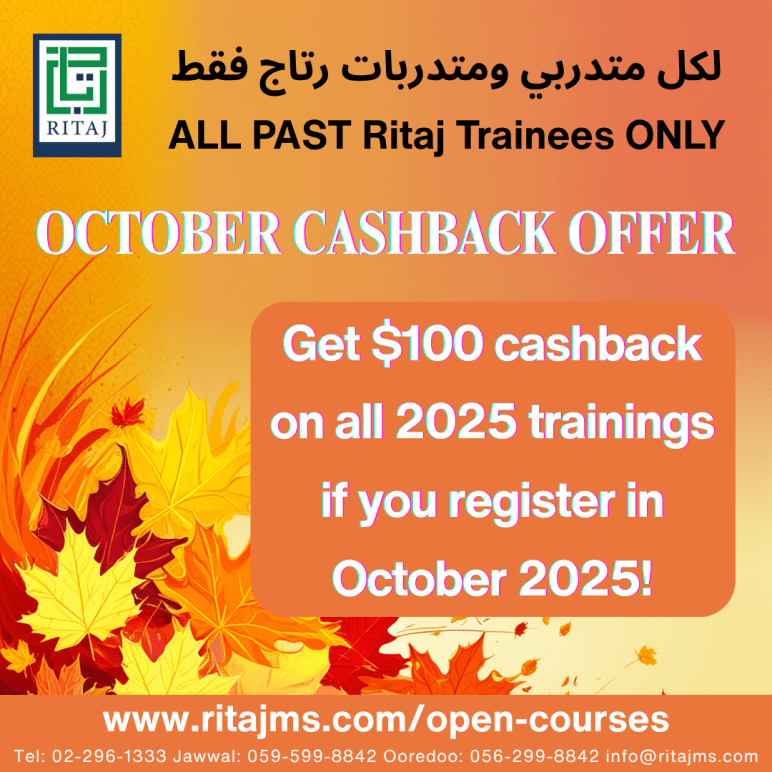
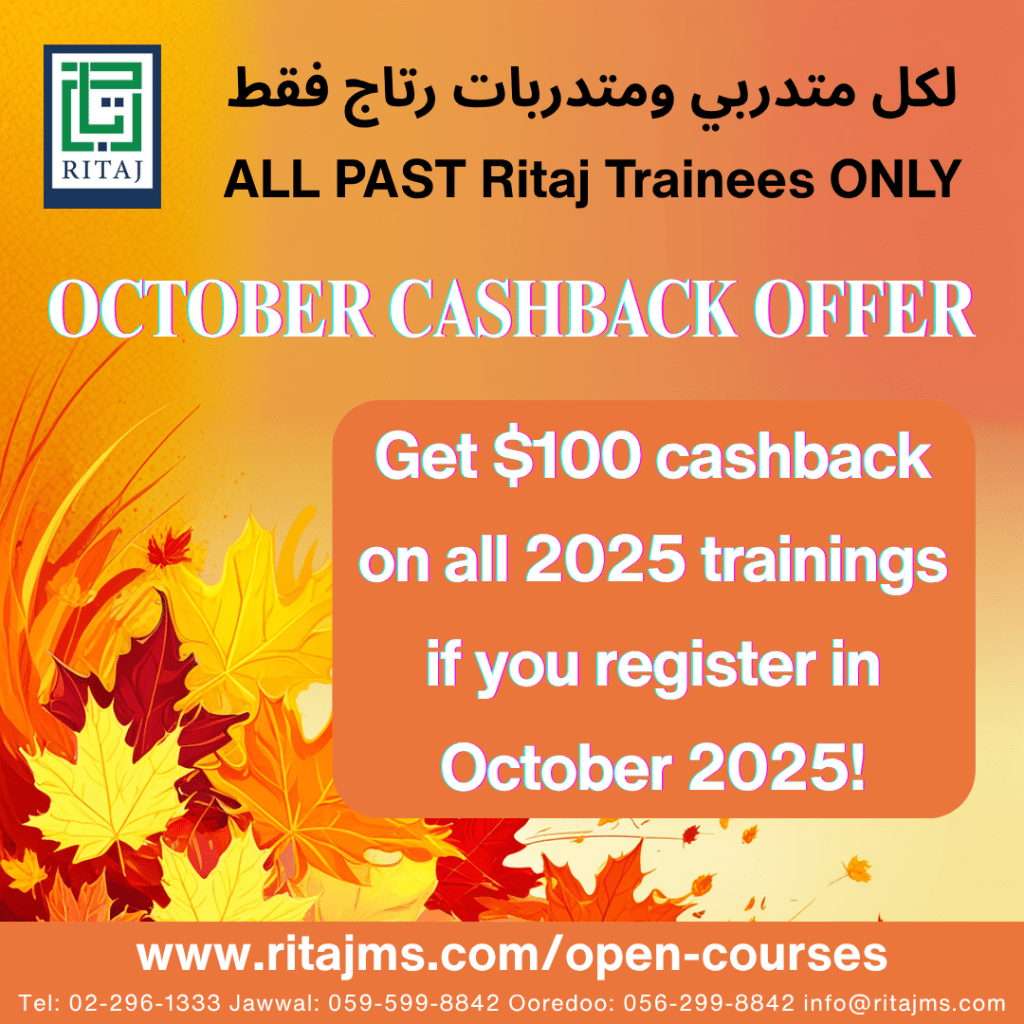
October Cashback Offer

Frequently Asked Questions (FAQ)

يوضع في رصيدك في رتاج أثناء شهر أكتوبر قيمة 100$ لتستفيد منها في أي تدريب تود حضوره أثناء العام 2025

.عدد المستفيدين غير محدود! كل من شارك في أي تدريب مع رتاج يمكنه الاستفادة منها

.لا توجد أي شروط! سوى أن يكون المتدرب قد شارك في تدريب سابق مع رتاج

.بما أنك أحد متدربي رتاج، فأنت تستحق العرض ويضاف إليه رصيد هذه الحملة

“…لأننا نؤمن بأهمية دعم بعضنا البعض “شدو بعضكم يا اهل فلسطين شدوا بعضكم

يمكنك التسجيل في أي تدريب متاح خلال عام .2025

كالمعتاد، من خلال تسديد الدفعة الأولى وإرفاق نموذج التسجيل أثناء شهر أكتوبر

.لا مشكلة، يكفي أن تكون بحوزتك شهادة المشاركة

.لا بأس، فرتاج يمكنها استخراج اسمك من النظام

.لا بأس، فقد ذكرنا أن الحملة لا تخضع لأي شروط أو قيود

.لا بأس، يمكنك زيارة رتاج لاستلام شهادتك وفي الوقت نفسه تأكيد تسجيلك ضمن الحملة

.الأفضل أن تتواصل مع رتاج مباشرة بهذا الخصوص

.بالفعل والأهم أنك تستطيع الاستفادة منها

Contact Us

To learn more, fill the following form (English or Arabic) and a training consultant will call you:

← Back

Thank you for your response. ✨

Certified Management Accountant (CMA) Part II

Certified Management Accountant (CMA) Part II

شهادة المحاسب الإداري المعتمد - الجزء الثاني

Objectives:

  • To analyze financial statements
  • To identify corporate finance practices
  • To identify the decision making process based on financial data
  • To prepare for the official CMAII exam

Topics:

SU 1: Basic Financial Statement Analysis

  • Common-size and trend analysis
  • Ratio categories and interpretation

SU 2: Financial Ratios

  • Liquidity, solvency, activity, profitability, market ratios
  • DuPont analysis framework

SU 3: Earnings Quality

  • Revenue recognition and expense analysis
  • Earnings quality assessment
  • Benchmarking vs. industry averages

SU 4: Types of Securities

SU 5: Financial Markets and Financing

SU 6: Valuation Methods and Cost of Capital

  • WACC, CAPM, marginal cost of capital

SU 7: Working Capital Management

  • Cash management
  • Receivables management
  • Inventory management
  • Liquidity management strategies

SU 8: Corporate Restructuring, International Trade, and Exchange Rates

  • Mergers, acquisitions, leveraged buyouts, divestitures
  • International trade financing methods
  • Exchange rates: systems, calculations, and factors
  • Exchange-rate risk mitigation strategies

SU 9: CVP Analysis

  • Breakeven analysis
  • Contribution margin and target income calculations
  • Multi-product CVP

SU 10: Marginal Analysis

  • Make-or-buy decisions
  • Special order decisions
  • Resource allocation under constraints

SU 11: Pricing Analysis

  • Cost-plus and market-based pricing
  • Sensitivity and scenario analysis
  • Decision trees

SU 12: Enterprise Risk Management (ERM)

  • COSO ERM framework
  • Risk identification and assessment

SU 13: Risk Types and Mitigation

  • Market, credit, operational, legal, reputational risks
  • Hedging: forwards, futures, options, swaps
  • Insurance and diversification strategies

SU 14: Ethical Considerations for Professionals

  • IMA Statement of Ethical Professional Practice
  • Fraud triangle and fraud risk model
  • Ethical decision-making framework

SU 15: Ethical Considerations for the Organization

  • Ethical culture and corporate governance
  • Handling conflicts of interest
  • Corporate social responsibility

SU 16: Capital Budgeting

  • NPV, IRR, Payback, Discounted Payback, Profitability Index
  • Conflicts among methods
  • Inflation and uncertainty in investment analysis

SU 17: Post-Audit of Capital Projects

  • Evaluation of investment effectiveness
  • Lessons learned and performance review
To learn more, fill the following form (English or Arabic) and a training consultant will call you:

← Back

Thank you for your response. ✨

Strategic Planning for NGOs (SPNGO)

Strategic Planning for NGOs (SPNGO)

التخطيط الاستراتيجي للمنظمات الأهلية

Objectives:

The training aims to achieve the following objectives:

1.      Definition of key performance indicators & the role of KPI’s in performance management.

2.      Align KPI’s with Org. strategic goals.

3.      Address the principles of effective KPI’s.

4.      Create methods for collecting and managing data.

5.      Identify steps setting up the KPI’s dashboard.

6.      How to analyze and deliver KPI’s data.

Topics:

  • Understanding the KPI’s and the added value for the management.
  • Organization goals vs. KPI’s.
  • Principles of Effective KPI’s.
  • Initiate methods for collecting data and managing data to drive the KPI’s.
  • Effective track and report KPI’s.
  • Analyze and understand KPI’s data and results.
  • Improve the KPI’s based on performance and feedback.
  • Check out technology and tools that facilitate KPI’s tracking.
  • Demonstration of sample dashboards 15-20 sample form different department sales, accounting, finance, HR

The design of the activities will be focusing on the participants’ ability to design KPIs by working on case studies and real-world exercise. The training will provide suitable data to use during practice.

Prerequisites

N/A

To learn more, fill the following form (English or Arabic) and a training consultant will call you:

← Back

Thank you for your response. ✨

Social Media Marketing Skills (SMMS)

Social Media Marketing Skills (SMMS)

مهارات التسويق عبر وسائل التواصل الاجتماعي

Objectives:

The training aims to achieve the following objectives:

1.      Definition of key performance indicators & the role of KPI’s in performance management.

2.      Align KPI’s with Org. strategic goals.

3.      Address the principles of effective KPI’s.

4.      Create methods for collecting and managing data.

5.      Identify steps setting up the KPI’s dashboard.

6.      How to analyze and deliver KPI’s data.

Topics:

  • Understanding the KPI’s and the added value for the management.
  • Organization goals vs. KPI’s.
  • Principles of Effective KPI’s.
  • Initiate methods for collecting data and managing data to drive the KPI’s.
  • Effective track and report KPI’s.
  • Analyze and understand KPI’s data and results.
  • Improve the KPI’s based on performance and feedback.
  • Check out technology and tools that facilitate KPI’s tracking.
  • Demonstration of sample dashboards 15-20 sample form different department sales, accounting, finance, HR

The design of the activities will be focusing on the participants’ ability to design KPIs by working on case studies and real-world exercise. The training will provide suitable data to use during practice.

Prerequisites

N/A

To learn more, fill the following form (English or Arabic) and a training consultant will call you:

← Back

Thank you for your response. ✨

Business English (BE)

Business English (BE)

Objectives

By the end of this course participant will:

  • Develop language building techniques
  • Engage in business conversations comfortably
  • Deliver professional presentations
  • Communicate with peers, suppliers, and upper management in English.
  • Express verbally or in writing about daily business situations.

Language Building Blocks

  • Professional structure of written correspondence
  • Review past emails written by participant
  • Discuss some key points
  • Receive and give feedback on grammar and phrasing of emails
  • Guided exercises to collect information
  • Use within context
  • Online follow-up
  • Tips on using PowerPoint
  • Building presentation content
  • Actual delivery of information
  • Receiving questions
  • Tips on professional communication
  • Simulations of situations to practice communication and negotiation techniques.
  •  
  • Participants receive a weekly reading plan that includes articles or videos to collect information and reuse phrases.

Training Topics

  • List of verb tenses,
  • List of parts of speech
  • List of linking words
  • List of grammatical rules

Lorem ipsum dolor sit amet, consectetur adipiscing elit. Ut elit tellus, luctus nec ullamcorper mattis, pulvinar dapibus leo.

  • How to write a business pitch
  • Organizing thoughts
  • Goal setting
  • Business negotiations
  • Business acronyms
  • Improve your presentation skills
  • Personal branding
  • Banking terminology
  • Banking article
  • Practice expressing current affairs in English
  • Reading material
  • Reference material
  • Links to videos
  • Additional material related to participants field of work

Prerequisites

A placement test.

To learn more fill the following form (English or Arabic) and a training consultant will call you:

← Back

Thank you for your response. ✨

Resource Mobilization (RM)

Resource Mobilization for the Resilience of Civil Society Organizations (RM)

حشد الموارد لدعم صمود مؤسسات المجتمع المدني

Objectives:

Training approach and methodology will focus on exploring and learning how to make more informed strategic decisions, to pivot resource mobilization/fundraising efforts based on financing prospects in the prevailing situation, and on simple but impactful adjustments to render CSOs more financially resilient.

  • Learn about institutional financial resilience
  • Know how to make organization more attractive to givers of all kinds
  • Strengthen traditional and non-traditional resource mobilization skills

Topics:

  • Personal introductions and motivations
  • What each person has to give to the group
  • Organizational presentations
  • What each organization has to give to the other organizations
  • Participants’ expectations
  • How do we explain our success in resource mobilization?
  • How do we explain our failure in resource mobilization?
  • Lessons learned: How did we get to where we are now?
  • How do we envision resource mobilization prospects in the current and near future situation?
  • Money right now: financial fire-fighting?
  • Financial risk mitigation?
  • Financial resilience?
  • Financial sustainability?
  • Is resilience always good?
  • Resilience versus Transformative-Resilience
  • Determinants of financial transformative-resilience
  • Decolonization of Aid and transformative financial resilience
  • Community-led Development and financial transformative resilience
  • Financial resources
  • Funding streams
  • Non-financial resources
  • Governance and accountability mechanisms
  • Resource mobilization policy
  • Clear organizational strategy and plans
  • Medium Term Resource Framework
  • Adaptive management capacity
  • Credibility
  • CSO resource mobilization challenges/issues
  •     CSO Revenue sources
  •     Financial vulnerability: revenue concentration; independency ratio; dependency quotient
  •     Which (available and potential) resource(s) that CSO could mobilize in the current situation? How?
  • Resource mobilization objectives and targets
  • Resource mobilization options:
  •       Financial
  •       Non-financial
  • Resource mobilization tools

Donor cultivation and retention

  • Identifying funding need
  • Concept Note
  • Donner mapping and identifying potential donor(s)
  • Funding Proposal
  • Follow-up with funding agencies

Prerequisites

Relevant work experience

Trainer

Mr. Khail Nijem is a strategic/spatial planning, project management, and community development specialist with a regional planning and civil engineering background. He has consolidated over 35 years of experience (more than half of which in senior level positions) in public, private, and NGOs sectors as an academic, researcher, and practitioner working in spatial and strategic planning, project planning and management, and institutional building. He has extensive experience in development planning at the national, regional and local levels and in relating community development issues to the public sectors’ and NGO’s planning and development functions. He led and/or participated in drawing several national, sectoral, regional, local, and institutional strategic plans as well as, in formulating a number of policy documents and tools. In Addition, Mr. Nijem has acquired considerable experience in managing large/complex development, capacity building, and institutional building projects both in Palestine and in the Middle East Region. He also provided consultancy and training services to public institutions, as well as, to local and international NGOs in the areas of strategic planning, policy development, participatory management, program/project planning, resource mobilization and fundraising, monitoring and evaluation, institutional building & organizational development, and participatory community research methods. Mr. Nijem is also NGOs activist serving as a Board member of several NGOs.

Testimonials

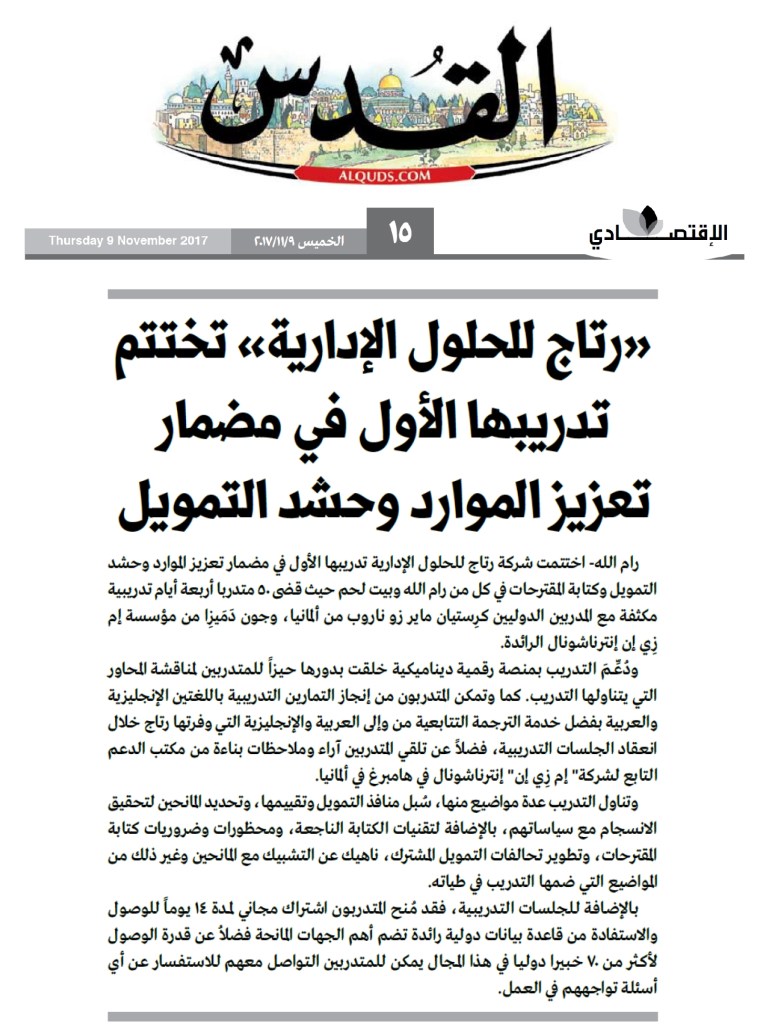
Past Media Coverge

To learn more, fill the following form (English or Arabic) and a training consultant will call you:

← Back

Thank you for your response. ✨