
Smart & Strategic Management (SSM)
مهارات الإدارة الذكية والاستراتيجية

This Smart & Strategic Management training program is a comprehensive, practice-oriented development experience designed for current and aspiring managers who aim to improve organizational performance, efficiency, and strategic impact. The training equips participants with modern managerial tools, analytical frameworks, and technology-driven approaches essential for today’s fast-changing business environment.
- Improve management techniques
- Enhances people management skills
- Polishes decision-making approaches
Managers, executives, department heads, team leaders, business owners. |
- CLICK HERE for date of next course
- Type: Classroom
- Duration: 20 hours
- Language(s): Arabic
Objectives
Upon completion of this program, the trainee will be able to:
- Implement Process Re-engineering and Lean Management: developing efficient process and reviewing non-value-added parts of processes.
- Develop Strategic Thinking and Competitive Positioning: introducing different strategy development frameworks and tools for analyzing internal and external environments.
- Utilizing New Technologies and Artificial Intelligence: introducing current trends in management and the usability of technology and data.
- Setting Indicators and Tracking Performance: learning about effective tracking tools and measurement frameworks, including SMART objectives.
- Enhance Decision-Making Skills: developing analytical thinking and avoiding biases.
Training Topics
- The Foundations of Analytical Problem Solving
- Root Cause Analysis (RCA): Identifying underlying reasons.
- Root Cause Analysis techniques: the “5 Whys”, 80/20 Rule, Premortem technique, etc.
- Lean Management Implementation
- Lean Management Philosophies
- Continuous Improvement (Kaizen)
- Mistake Proofing.
- Just-In-Time (JIT) and Six Sigma.
- The 7 Forms of Waste
- Tools for process analysis and optimization
- Process Automation
- Visualization
- More or less Friction
- Default Settings
- Layout Redesign
- Value Analysis
- Managerial tools for decision making.
- Time value of money
- Choice overload
- Sunk cost fallacy
- Make or buy decisions
- The Foundations of Strategic Thinking
- Defining the Strategy
- Strategy as the Pursuit of Uniqueness
- The Four Essential Questions of Organizational Strategy
- Strategic Approaches: Speed, Experience, Big Data Power…etc.
- Strategic Analysis Frameworks
- Porter’s Five Forces: Analyzing Industry Attractiveness
- Advanced SWOT Analysis: From Listing to Strategizing
- PESTLE Analysis: Navigating the External Environment
- Generic Strategies: Cost Leadership vs. Differentiated Value
- Vertical Integration & Horizontal Integration
- Real-world Applications and Case Studies
- Some Reasons Why Strategies Fail or Succeed
- Monitoring, Controlling, and Evaluation: what are the differences?
- Logic Models: Distinguishing between the Results Chain, Theory of Change (ToC), and the Logframe.
- The Performance Baseline: Managing the “Iron Triangle” of projects.
- Baselines: rolling baselines, managerial baselines.
- Prevention and inspection.
- Understanding impact: Attribution vs. Contribution.
- Data Triangulation and using Control Groups and A/B Testing.
- Difference between qualitative and quantitative analysis.
- Tools and examples for turning qualitative data into quantitative data.
- Virtual teams – new trends.
- Applications of Artificial Intelligence in management.
- Utilizing Gemini and NotebookLM in management.
- Virtual Reality (VR) & Augmented Reality (AR).
- Case studies of data utilization for organizational success.
- Big data utilization in mass customization.
Prerequisites
N/A
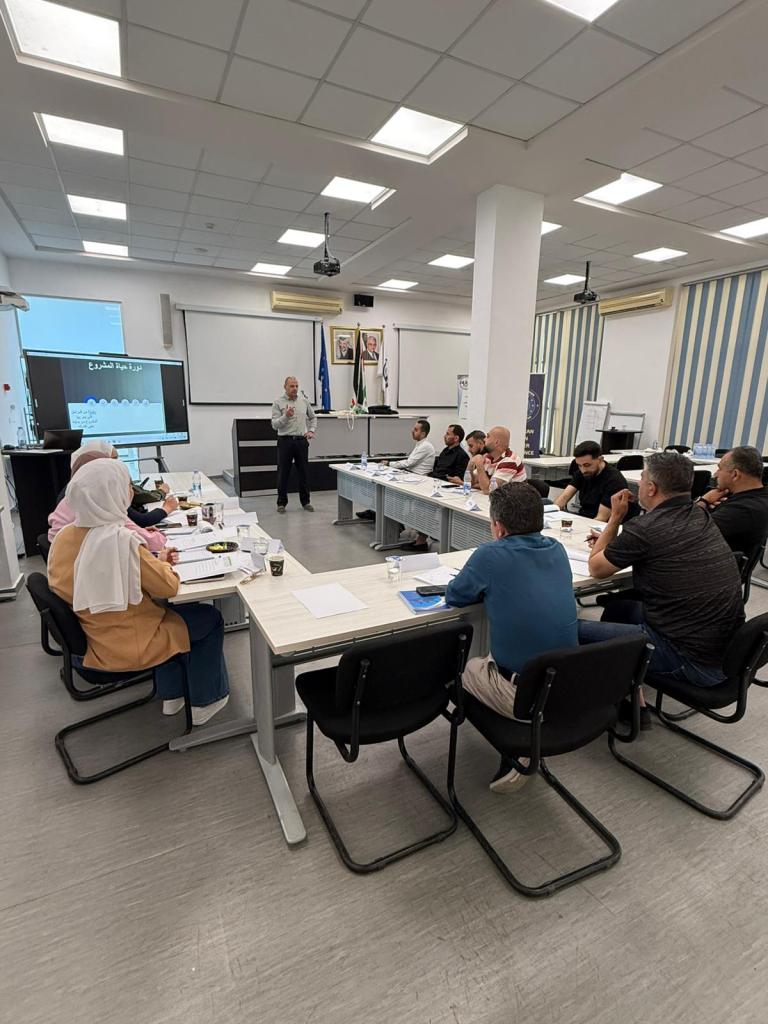
Mohammad Abu Libdeh Trainer Mohammad Abu Libdeh possesses extensive experience in both the private and non-for-profit sectors. With 19 years of professional experience, he worked in many senior positions including working as Chief Operations Manager and Senior Business Advisor. He achieved his master’s degree with merits from Indiana University of Pennsylvania (GPA 4.00), and he is currently pursuing his doctoral degree in project management. Additionally, Abu Libdeh is the first Palestinian to achieve a combination of five different international highly reputable managerial certificates. Abu Libdeh holds PMP, PgMP, PMI-RMP, PMI-SP, and CBAP. Mr. Abu Libdeh is experienced in many domains including: project management, risk management, monitoring and evaluation, process re-engineering, organizational restructuring, reporting, strategic planning, business development, investments evaluation, HR-related skills, managerial manuals development, procurement management, developing feasibility studies, handling logistics, and fund seeking and managing relations with donors. In collaboration with Ritaj, Abu Libdeh prepared and delivered many training courses in different managerial topics such as project management and risk management. He developed a unique training approach that is both interactive and provides rich information. |