
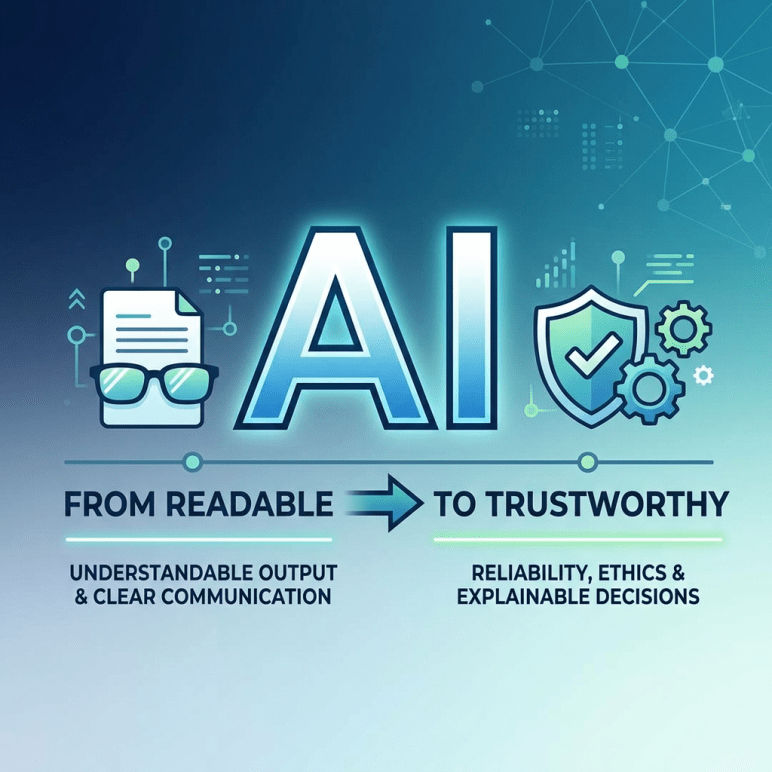
From Readable to Trustworthy
Finished at first glance?
At first glance, the translation looks finished.
The sentences are there. The paragraphs are in place. The terminology seems polished, and the document gives you the impression that it is complete.
But that impression can be deceptive.
In recent months, I have worked on several projects where clients shared documents that had already been translated using AI or machine translation tools and asked us at Ritaj to proofread and edit them. On the surface, these files often seem readable. The sentences are there, the meaning appears to be generally conveyed, and the structure looks mostly intact. However, once I begin editing, it quickly becomes clear that the task goes far beyond simple proofreading.
The Consistency Problem
Why does the same term keep changing?
One thing I have noticed repeatedly is that AI-generated translations often struggle with consistency. The same term may appear in different forms across the same document, especially in longer reports that include multiple sections, tables, and technical frameworks. A heading may be translated one way in the main text and differently in a table. In other cases, key terminology shifts from one section to another, which affects clarity and weakens the professionalism of the final output.
When Structure Starts to Break
What happens when the translation no longer matches the source?
In some projects, I found that the machine-translated version did not fully match the source document in terms of layout and logic. This was especially visible in tables. Some rows contained partially untranslated text, while others had numerical values missing from one version. There were also cases where section titles were incomplete; numbering did not align, or content appeared to be missing altogether.
Editing Beyond Language
This is where editing becomes much more than correction.
A large part of my work on such projects involved comparing the translated version against the source, identifying gaps, restoring consistency, and making sure that the final text reflects the intended meaning accurately. Sometimes this means correcting terminology. At other times, it means flagging missing content through comments, restructuring tables, aligning figures and percentages, or adjusting the flow of information so that the document reads as one coherent piece rather than a collection of disconnected sections.
The Real Challenge: Context
So, what is the real issue?
What we often find is that the language itself is not always the main issue. AI can generate grammatically acceptable sentences, but it does not always understand how terms function within a specific sector or report. For example, a phrase may sound natural in Arabic but still fail to reflect the technical meaning of the original English.
This is where human judgement matters.
AI can generate sentences that sound fluent on the surface, but fluency is not the same as accuracy. A sentence may look polished and still fail to express the intended meaning within a specific sector. This is especially true in reports that deal with technical, economic, educational, or institutional content. A term may sound perfectly normal in Arabic but still be the wrong term for that field. A phrase may be grammatically correct yet completely miss the function it serves in the original text. Machines can imitate language patterns, but they do not reliably understand the weight of context, purpose, or audience.
From Readable to Trustworthy
Editing is what makes the text trustworthy.
That is why I do not approach these files as if I am simply fixing someone else’s draft. In many cases, I am rebuilding the document so it can be trusted. The real value of editing AI-translated material lies in restoring coherence, precision, and credibility. It is the step that turns a text from something merely readable into something usable.
AI can assist, but it cannot replace judgement.
AI can certainly speed up parts of the process, and I understand why many clients use it as a starting point. But in my experience, the final quality still depends on professional human intervention. The more sensitive, technical, or public facing the content is, the more important that intervention becomes.
What Good Language Really Requires
Language quality is about more than words. What this work has shown me very clearly is that language quality is never just about words on a page. It is about consistency, context, structure, and meaning. And those are still things that require a human eye.